
Should You Clean Your Own Gutters in Des Moines?
Published July 19, 2026 · 8 min read
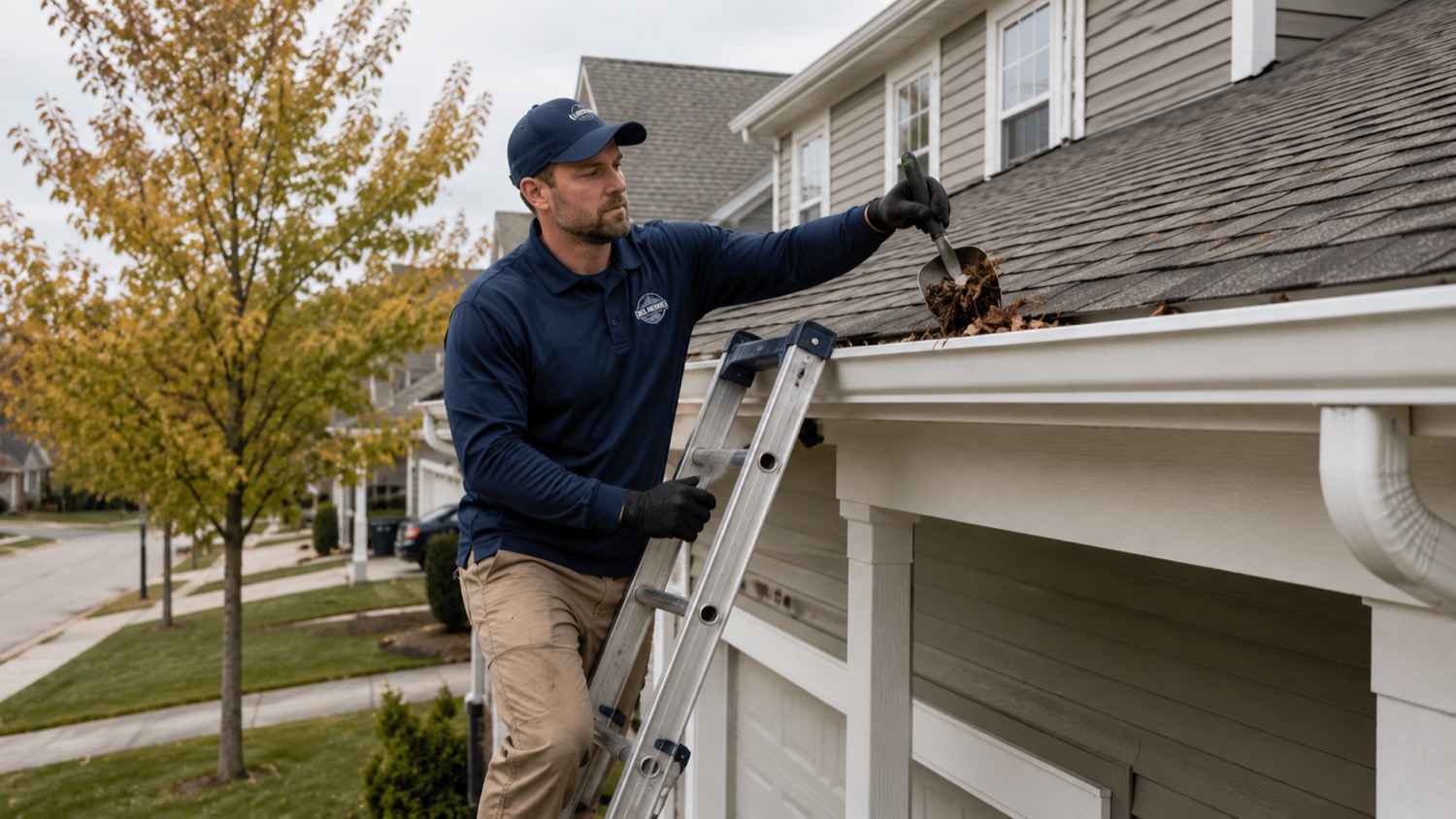
Yes, you can clean your own gutters, and several ground-based tools genuinely work. A water-fed telescopic pole clears loose, dry debris and silt without a ladder. A gutter scoop is the most effective option per dollar but requires climbing and moving the ladder every few feet. A pressure washer works only at low PSI, held well back from the metal. What does not work as well as the marketing suggests: shop-vac attachments on wet, compacted fall debris, and any ground tool once the gutter is packed and heavy. That is the honest line where hiring it out starts to make more sense than it did an hour of research ago.
Every gutter tool ad shows the same thing: someone standing comfortably on the lawn, wand in hand, debris flying out cleanly in one pass. Some of that is real. Some of it is a demo on a gutter that was already three-quarters empty.
Gutters are the only line item on our menu, so a DIY homeowner is not a lost sale to us the way it is to a company juggling window washing and pressure washing on the side. Plenty of homes here are fine candidates for DIY. What follows is which tools actually earn their price, which ones oversell what they can do, and where the line sits between a Saturday project and a call worth making.
The Ground-Based Tools That Actually Work
Water-fed telescopic poles
A pole that attaches to a standard garden hose, with a curved hook and a nozzle at the top, is the closest thing to a real no-ladder solution. Walk the perimeter of the house and blast the channel from below. On loose, dry debris and the fine silt that collects at the bottom of a gutter, it works about as well as the demos show, and it is the tool most homeowners should try first for a light or a mid-season touch-up.
Where it runs out of ability is compacted, wet material. Once fall debris has sat through a few rains and packed down into a mat, water pressure from a hose attachment usually is not enough to break it loose. You end up standing in the yard, soaked, watching the water sheet uselessly over the top of a clog that has not moved.
Gutter scoops
The plain plastic scoop, the kind that looks like an oversized ice cream scoop shaped to fit a gutter channel, remains the most effective tool for actual debris removal, and it costs less than a single professional cleaning. It works on wet, compacted material that defeats a hose attachment because it physically lifts the debris out instead of trying to wash it away.
The catch is that it requires being on a ladder, and not just once. A standard extension ladder reaches roughly four to five feet of gutter run before you have to climb down and move it, which for an average home means a dozen or more ladder moves per cleaning. That repetition, not any single moment, is where most ladder incidents happen: not the first climb of the day, but the eighth or ninth, when the setup gets rushed.
Pressure washers, used carefully
A pressure washer can clear a gutter fast, but this is the tool most likely to cause damage if you do not respect the numbers. Gutter cleaning calls for roughly 1,500 to 1,800 PSI, not whatever setting your washer defaults to, held at least 12 to 18 inches back from the metal with a wide-angle nozzle. Get too close or too aggressive and you can bend a gutter, blow apart a seam, knock a bracket loose from the fascia, or drive water up under the shingles at the roofline, which is how a cleaning turns into a repair bill. If you already own a pressure washer, it is a capable tool. If you are buying one specifically for gutters, a scoop or a water-fed pole is the lower-risk starting point.
The Tool That Oversells Itself
Shop-vac gutter attachments look like the cleanest solution on paper: hook the extension into the channel, flip on the vacuum, and suck the debris straight into a canister with no mess in the yard. On dry debris, that mostly holds up. On the wet, compacted sludge that defines a typical Des Moines fall cleaning, most attachments struggle. The material clogs the extension tube, the suction cannot pull it through, and you end up back on the ladder clearing the blockage by hand anyway. Treat a vacuum attachment as a spring tool for light, dry debris, not a fall solution.
What False Confidence Actually Costs
The risk with ground-based tools is not that they fail loudly. It is that a water-fed pole or a vacuum attachment can look like it worked, clearing the top layer and the visible debris, while leaving a compacted base layer sitting in the channel. The gutter looks better from the yard and still is not draining correctly, which is exactly the setup we described in our piece on the signs your gutters need cleaning. Water sheeting over the front edge in the next rain means the ground tool did not finish the job, even though it looked done.
That gap matters more heading into a Des Moines winter than most homeowners expect. A gutter that reads as clean but is still partly blocked cannot drain during a freeze-thaw cycle, and standing water at the roof edge is one of the mechanisms behind an ice dam, which we cover in our guide to ice dams and Des Moines gutters. If you DIY, the real test is not whether the tool felt like it worked. It is whether water runs cleanly to the downspout in the next hard rain.
Where the Line Actually Sits
A single-story home, a stable ladder setup, light or dry debris, and someone who is genuinely comfortable on a ladder is a reasonable DIY job with the right tool for the job. That describes a real share of homes in the metro, including the newer subdivisions around Polk City, where the landscaping is still young and the debris load is lighter to begin with.
The line moves once any of three things are true: the home is two stories, the debris is wet and compacted rather than loose and dry, or the ladder setup itself is not solid, whether that is an uneven yard, a steep roof pitch, or just being unsure on a ladder in the first place. That is also where the injury numbers stop being abstract. Research cited by the CDC's National Electronic Injury Surveillance System found well over 100,000 ladder-related injuries treated in US emergency rooms every year, and a two-story home on wet fall footing is exactly the setup those numbers describe. A heavily loaded street like the tree-lined blocks around Johnston is precisely the case where the debris outpaces what a ground-based tool can fully clear, which pushes more of these jobs toward the ladder regardless of which tool you start with.
None of that means DIY is wrong. It means "should I clean my own gutters" really answers as "clean the ones a ground tool can actually finish, and be straight with yourself about the ones it cannot." If you land on the second category, our gutter cleaning service covers the metro, priced from your address and roof height, before anyone drives out, with the full breakdown in what gutter cleaning costs in Des Moines. And since nobody is checking a contractor's credentials for you before they get on your roof, our piece on vetting a gutter cleaning company covers the questions worth asking before you hand the job off.
Whatever you choose, choose it on a schedule rather than by accident. Our season-by-season cleaning guide lays out the two windows, late spring and late fall, that matter most for a metro home, DIY or hired out.
Should You Clean Your Own Gutters
Should I clean my own gutters or hire someone?
It depends on your roof and your tools. A single-story home with light debris and a stable ladder setup is a reasonable DIY job for someone comfortable on a ladder. A two-story home, a steep roof, or a gutter packed with wet, compacted debris is where the math changes. That is also where most ladder injuries happen, so weigh the real risk against the cost of having a professional do it.
What is the best ground-based tool for cleaning gutters without a ladder?
A water-fed telescopic pole that attaches to a garden hose is the most reliable ground-based option for loose, dry debris and silt. It will not fully clear a gutter packed with wet, compacted leaves, and it will not tell you if a hanger is loose or a seam has opened up, which is something you can only catch by getting close.
Can I use a pressure washer to clean my gutters?
Carefully, and only at low pressure. Gutter cleaning calls for roughly 1,500 to 1,800 PSI at most, held at least 12 to 18 inches from the metal. Anything higher risks bending the gutter, popping a seam, knocking a bracket loose, or forcing water up under the shingles and behind the fascia, which turns a cleaning into a repair.
Do gutter cleaning vacuum attachments actually work?
On dry debris, reasonably well. On the wet, compacted sludge that is typical of a Des Moines fall cleaning, most shop-vac gutter attachments struggle to pull material through the hose and clog quickly. They are a better fit for a light spring touch-up than a full fall clearing.
Is it legal to hire someone off the internet to clean my gutters in Iowa?
Yes. Iowa has no license for gutter cleaning, and the closest thing the state has is contractor registration for construction work, which a cleaning is not. That means the vetting is entirely on you. Our guide on how to vet a gutter cleaning company walks through the questions worth asking before anyone gets on your roof.
Decided It's Not a DIY Job This Time?
Skip the ladder. Give us a call or send a photo and we will price the job before anyone shows up at your door.