
Overflowing Gutters and Foundation Water: The Des Moines Basement Connection
Published July 18, 2026 · 8 min read
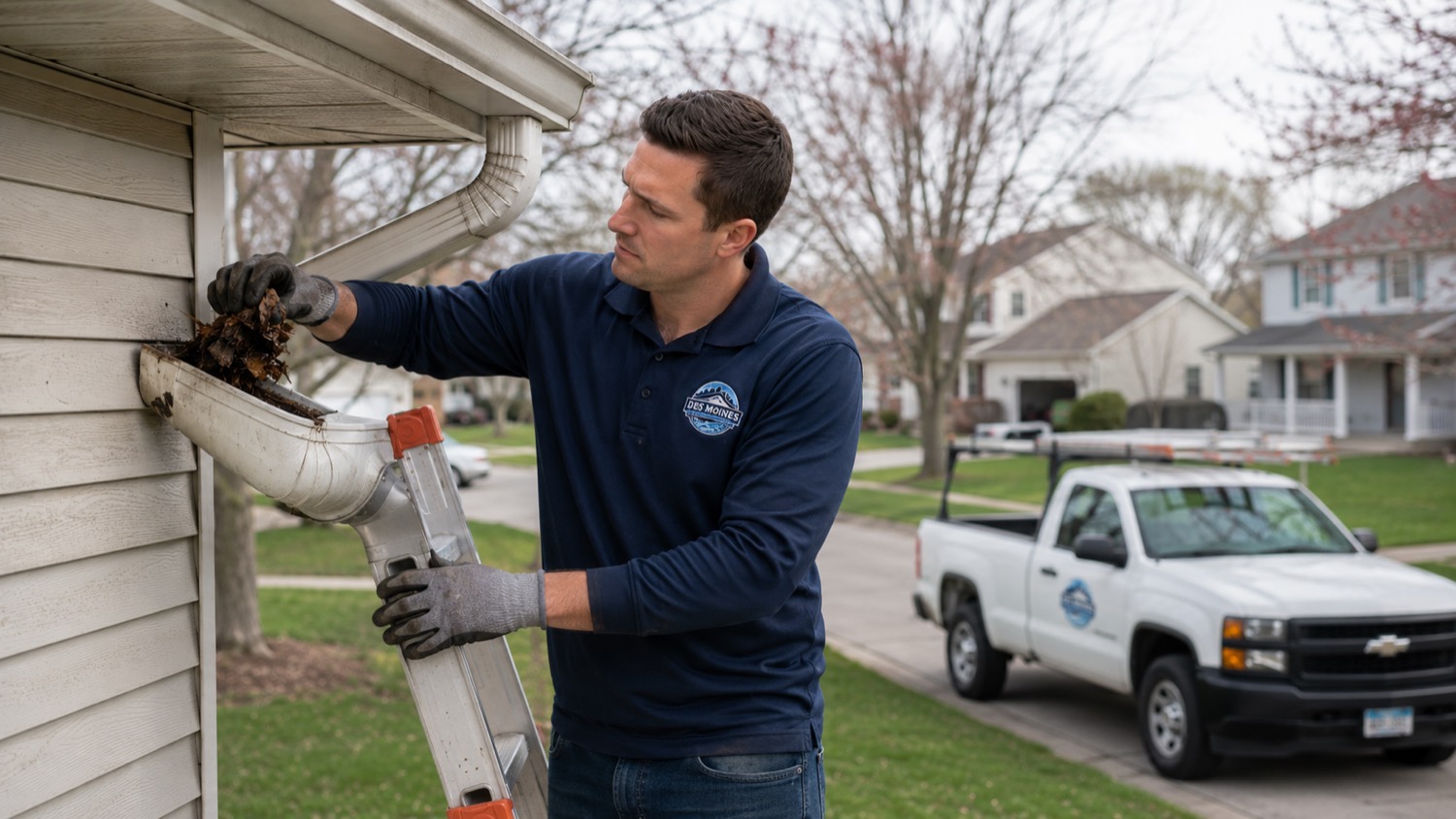
An overflowing gutter dumps roof water in a concentrated spot right against your foundation, and on the clay soil common in central Iowa that water collects in the loose backfill around the house and presses in through any crack until it reaches the basement.The chain runs clogged gutter to overflow to saturated soil to hydrostatic pressure to a wet basement. Clearing the gutter and getting the downspouts to discharge six to ten feet from the house is the cheapest place to break it, and it is where a Des Moines homeowner should start.
A wet basement rarely feels like a gutter problem. It feels like a foundation problem, or a groundwater problem, or bad luck with an old house. And sometimes it is one of those. But in the Des Moines metro, a surprising share of the wet basements we hear about trace back to something a lot cheaper and simpler sitting up at the roofline.
We clean gutters for a living, so we see the top of this chain constantly, and homeowners almost never connect the two ends of it. Here is how a clogged gutter turns into water in your basement, why central Iowa dirt makes it worse than it would be elsewhere, and the part you can fix for the price of a cleaning instead of the price of waterproofing.
What a Gutter Is Actually For
It is worth remembering what the whole system exists to do, because it is not really about the roof. A gutter catches the water coming off a large roof surface and routes it through the downspouts to a single controlled exit well away from the house. The entire point is to take a big volume of water that would otherwise fall straight down along the walls and move it somewhere it cannot hurt anything. The roof is just where the water is collected. The foundation is what the gutter is really protecting.
How the Chain Runs From Roof to Basement
When a gutter clogs, that protection reverses. Instead of carrying water to a safe exit, the packed gutter overflows, and all the water off that stretch of roof pours over the front edge in a sheet and lands in one concentrated strip of ground right at the base of the wall. A single heavy central Iowa downpour can put hundreds of gallons through that one spot in an afternoon.
That water soaks into the soil against the foundation and does not simply drain away, which is where our local dirt turns a nuisance into a real problem. When a house is built, the hole for the foundation is dug wider than the walls and then backfilled with loosened soil. That backfill drains faster than the dense, undisturbed clay around and beneath it, so water heading down collects in that looser ring and pools against the wall, a pattern often called the clay bowl effect. Now you have a column of saturated soil sitting against the foundation with nowhere to go.
Saturated soil is heavy and it pushes. That sideways force is hydrostatic pressure, and it works on the wall around the clock, finding its way through hairline cracks, cold joints, and the seam where the wall meets the floor. It does not take a dramatic crack. A little steady pressure against a lot of small openings is exactly how a basement goes from dry to damp to actively leaking, and it usually shows up first after the kind of heavy rain that overwhelmed the clogged gutter in the first place. If you are reading this in the days after a big one, the post-storm gutter check is the five-minute version you can do from the yard.
Why Des Moines Sits in the Hard Case
Central Iowa is not neutral ground for this. The metro sits on dense, clay-heavy soil that absorbs water slowly and holds it long after the rain stops, so the saturated zone against your foundation lingers instead of draining off in an hour. That same clay is a shrink-swell soil: it expands when it takes on water and shrinks back when it dries out, and that constant movement stresses a foundation wall on top of the water pressure it is already carrying.
Put a slow-draining, moisture-holding, seasonally-shifting soil against a foundation and then aim a clogged gutter's overflow straight at it, and you have built the conditions for a wet basement on purpose. The homeowner did not do anything wrong. The gutter just stopped doing the one thing that was keeping the water out of that zone.
The Cheap Fix at the Top of the Chain
The good news is that the top of this chain is the cheapest link, and it is the one a homeowner can actually control. Two things break it. First, keep the gutters clear so they carry water to the downspouts instead of over the edge, which is a routine cleaning, not a repair. If you are not sure whether yours are overflowing, the signs your gutters need cleaning tell you what to look for from the ground, and how often to clean them depends on your lot.
Second, and just as important, get the water out past the danger zone once it reaches the ground. A downspout that empties right at the base of the wall has only moved the flood a few inches. The water needs to discharge at least six feet from the foundation, and on clay soil ten feet is the safer number, whether that is through an extension or a buried drain line. Clearing the gutter and clearing the downspouts are two halves of the same job, which is why our gutter cleaning includes flushing the downspouts: a spotless gutter that drains into a clogged downspout still overflows.
When the Gutter Is Not the Whole Story
We will be straight about the limits of what we do. Clearing the gutters and extending the downspouts removes the most common and most affordable cause of foundation water, and for a lot of homes with minor seepage that is the end of it. But if your basement still takes on water after the roof drainage is genuinely handled, the problem has moved past our trade, and the next call is a foundation or waterproofing specialist, not another gutter cleaning. Anyone who tells you a gutter service will cure a serious water problem is overselling.
What we can promise is that the roof-water half is done right. Because gutters are the only thing we do, we are looking at the whole path from the roof to where the water lands, not just scooping leaves. If you are in a lower-lying part of the metro where this bites hardest, like the flood-prone Valley Junction area of West Des Moines, getting the roof water managed is not optional maintenance, it is the first line of defense. Our gutter cleaning service covers the whole metro, and the cost of a cleaning is a rounding error next to a finished basement.
Gutters, Foundation Water, and Basements in Des Moines
Can clogged gutters really cause a wet basement?
Yes, and it is one of the most common paths to one in the Des Moines metro. A clogged gutter overflows down the side of the house and dumps roof water in a concentrated spot right against the foundation. That water saturates the soil packed around the foundation, and once that soil is waterlogged it presses against the wall and works through any crack or joint it can find. The gutter is often the cheapest link in that chain to fix.
How far should downspouts drain from the house?
Get the water at least six feet from the foundation, and on the clay soil common in central Iowa, ten feet is the safer target. A downspout that dumps right at the base of the wall is only moving the overflow problem a few inches. Extensions or a buried drain line that carry the water well out into the yard are what actually keep it away from the foundation.
Why is a wet basement worse on clay soil?
When a foundation is dug, the hole is backfilled with looser soil that drains faster than the dense clay around it. Water heads for that loose soil and collects in it like a bowl, right against the foundation, which is why it is sometimes called the clay bowl effect. Central Iowa clay also swells when wet and shrinks when dry, and that constant movement stresses the wall on top of the water pressure. Keeping roof water out of that zone in the first place is the whole point of a working gutter.
I already have some basement moisture. Will cleaning my gutters fix it?
It might solve it and it will almost always help, but it is the first thing to rule out, not the only thing. If overflowing gutters are dumping roof water against the foundation, clearing them and extending the downspouts removes a major water source and often ends minor seepage. If the basement still takes on water after that, the issue is deeper and you want a foundation or waterproofing professional. Start with the gutter because it is the cheapest and most common cause.
Keep the Roof Water Off Your Foundation
The cheapest way to protect a basement is to make sure the gutters and downspouts are actually moving water away from the house. Tell us where you are in the metro and we will get you a price.