
What to Do With Your Gutters After a Des Moines Storm
Published July 20, 2026 · 8 min read
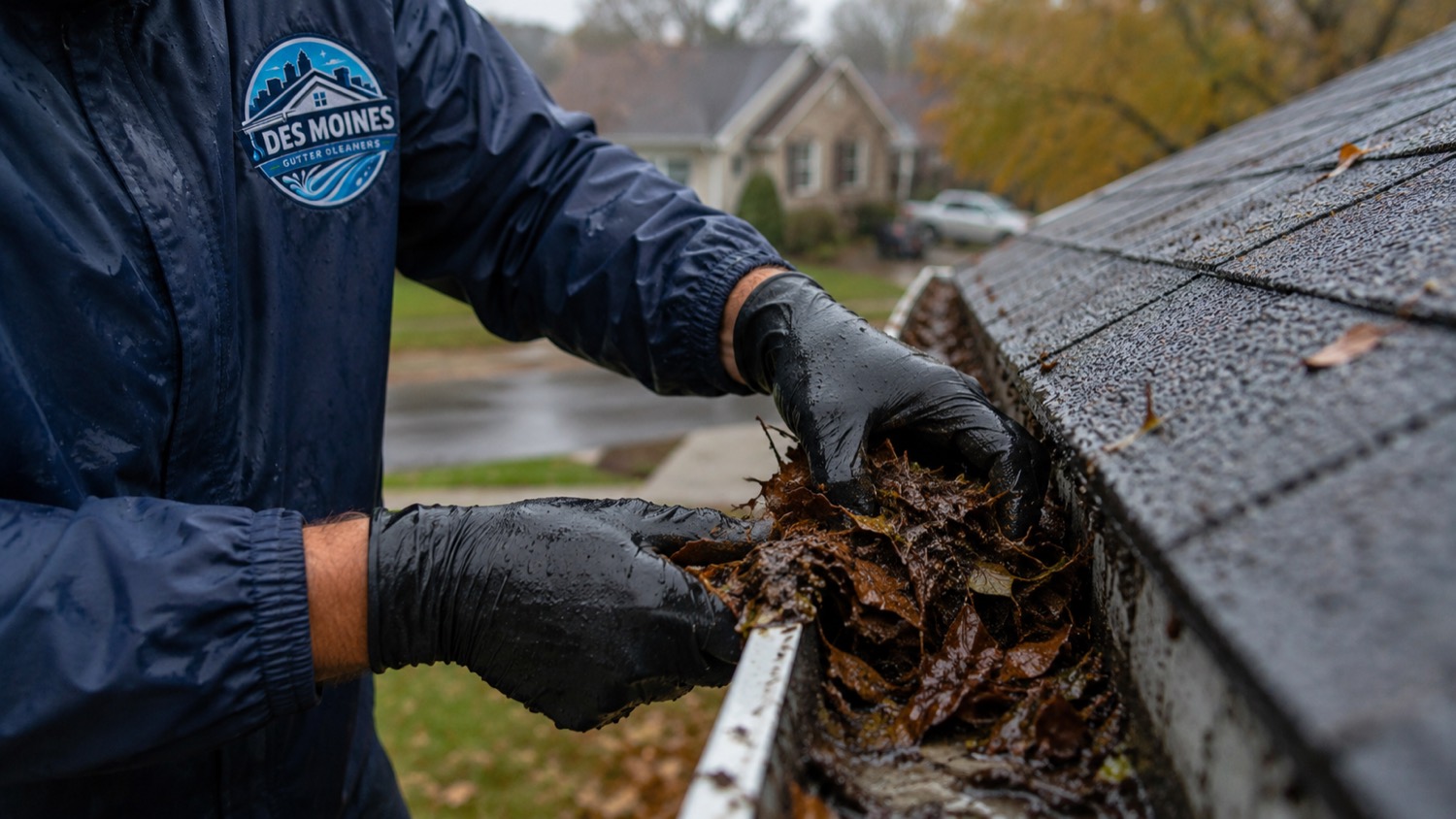
After a storm, check your gutters from the ground for four things: water still dripping from a joint after the rain has stopped, a section sagging or pulled away from the fascia, grit and granules washed into a pile at the downspout outlet, and fresh debris sitting on the gutter line. Storms rarely break a gutter outright. What they do is deliver a season of debris in one afternoon, wet and packed, and expose hardware that was already loosening. The useful test is not what your gutters did during the storm. It is what they are still doing an hour after it passed.
Central Iowa does not spread its rain out politely. According to NOAA climate normals for the Des Moines airport, the metro averages about 36.5 inches of precipitation a year, and roughly ten and a half of those inches arrive in May and June alone. The system on your roof does its hardest work in a narrow window, and that window lands right after the spring debris drop.
Which is why the summer gutter question is rarely "are my gutters dirty." It is "something happened during that storm and I cannot tell whether it is a problem." Here is how to sort that out without getting on a ladder.
Overwhelmed or Blocked? The Only Question That Matters
Almost every post-storm gutter worry comes down to one distinction, and most people never hear it made. A gutter can fail two completely different ways, and they look identical from the driveway while it is raining.
Overwhelmed means the system is working and losing anyway. A gutter is sized for typical rain, not for the twenty-minute downpours central Iowa produces in early summer. Water sheeting over the front lip at the height of a storm is usually the system being outrun. That is not a defect and there is nothing to fix.
Blocked means water cannot get out even when the rain has stopped. This one is a real problem, and it is the one worth acting on.
The test that separates them is time. Wait an hour after the rain eases and look again. An overwhelmed gutter is empty and quiet. A blocked one is still dripping from a joint, still holding water, still finding its way over an edge. Everything else in this post is downstream of that single observation.
What Actually Happens to a Gutter in a Storm
Three separate things arrive at once, and they do different damage.
Debris, delivered all at once and wet. This is the part people underestimate. A normal fall load accumulates over weeks and stays loose enough that water still finds a path. Storm debris is small branches, stripped seed litter, and roof grit dumped into the trough in a single afternoon, soaked, where it packs into a dense mat. A gutter that drained fine yesterday morning can be genuinely blocked by last night.
Wind loading on hardware. Gutters hang from hangers screwed into fascia board. Wind plus the weight of a full trough of wet debris is the combination that finds the hanger that was already halfway out. This is why storm damage often shows up as a section that has begun to sag rather than anything dramatic.
How Bad Do Central Iowa Storms Actually Get?
Worth grounding this, because it is easy to either over-dramatize or shrug it off. Two events from the National Weather Service Des Moines office give the honest range.
On June 30 and July 1 of 2018, storms stalled over the metro and NWS Des Moines recorded a widespread swath of five to ten inches of rain over the northern half of Polk County. Walnut and Fourmile Creeks hit record stages. Dozens of vehicles were stalled or swept away. That is a year's worth of a wet month landing in about a day and a half, and no gutter system on any house handles that without help from clear downspouts and somewhere for the water to go.
The August 2020 derecho is the other reference point, and it is worth being precise about it because the numbers get inflated in retelling. The NWS Des Moines summary puts the highest measured gust in the metro at 85 mph, recorded by a trained spotter in Urbandale, with the airport measuring 75. The catastrophic winds that leveled parts of Marshalltown and Cedar Rapids were a different part of that storm's 750-mile path. Des Moines got a serious wind event with widespread limb damage and power loss, not the worst of it. That distinction matters when you are deciding whether what you are looking at is storm damage or just a full gutter.
The Five-Minute Check, From the Ground
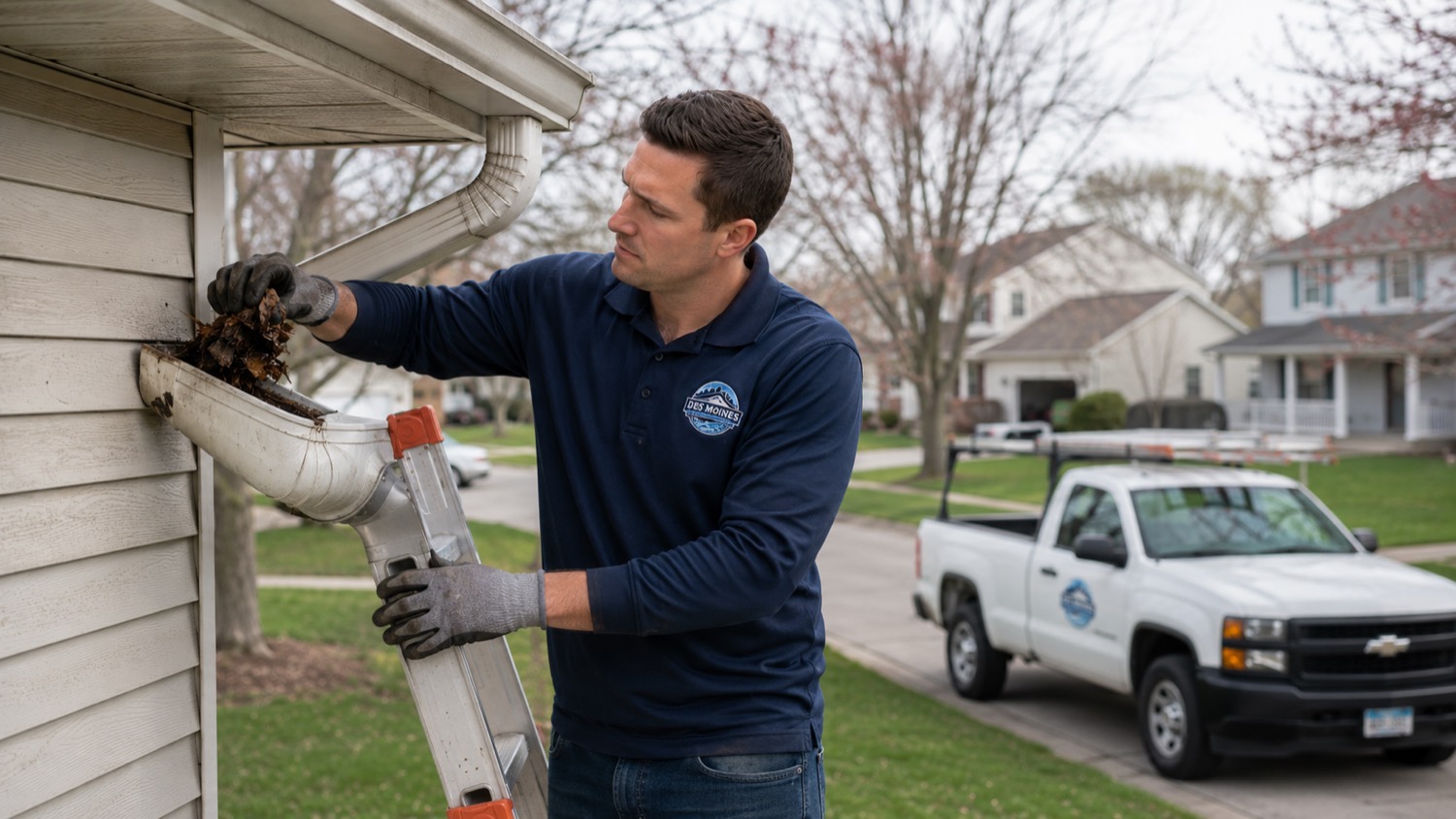
Do this once the rain has eased, not during. Nothing here requires a ladder.
- Watch the joints an hour after the rain stops. A gutter should be finishing its drain. Water still dripping steadily from a seam or an end cap means water is standing in there, which means something is holding it.
- Sight down the length of each run. You are looking for a dip. Gutters are hung with a slight, deliberate pitch toward the downspout, so a visible sag in the middle is new and it is holding water.
- Look at the ground under each downspout outlet. A fan of dark grit and shingle granules means the roof shed material into the system. Some of that is normal. A pile of it after one storm means there is more still sitting in the trough.
- Look at the top edge of the gutter line. Twigs and leaf tips poking above the front lip mean the trough is full to the brim, not partly loaded.
- Check where the water is landing. If a downspout is dumping against the foundation instead of away from it, that is the storm consequence that costs the most later.
Our full checklist of signs your gutters need cleaning goes deeper on reading each of these, including the ones that show up between storms.
The Thing That Actually Costs Money Later
A full gutter is an annoyance. A downspout pouring against your foundation all summer is a different category of problem. Water that repeatedly saturates the ground right against a foundation is a slow, cumulative failure rather than a dramatic one, which is why it tends to get discovered late. We wrote about the full chain, including what the clay-heavy soil common in this part of Iowa does when it takes on and gives up water, in our piece on overflowing gutters and foundation water.
This is also where geography starts to matter. In West Des Moines, parts of the city near the Walnut Creek and Raccoon River corridors are prone to flooding on their own, and a gutter dumping at the foundation there is adding to a problem the ground already has. In Norwalk, the rolling ground south of the Raccoon River moves water fast, so a clogged downspout finds somewhere else to go sooner than it would on flat land.
What Not to Do After a Storm
Do not get on a wet ladder to check a gutter you are curious about. Storm follow-up is when people climb in exactly the wrong conditions: soft ground under the feet, a wet roof edge, and the urgency of thinking something is wrong. Everything in the list above is visible from the yard. Our honest look at whether you should clean your own gutters covers where the ladder math genuinely works and where it does not.
And be careful about who you call in the days after a big storm. Storm response brings out door-knockers, and Iowa has no license for gutter cleaning, so there is no credential anyone has to hold before offering to fix your roof edge. Our guide on vetting a gutter company covers the questions worth asking, and they matter more in the week after a storm than at any other time of year.
When It Is a Cleaning and When It Is a Repair
Useful line to know, since it decides who you should be calling. If the gutter is intact and full, that is a cleaning. If a run is bent, separated at a seam, or pulled away from the fascia, that is a repair, and it is a different trade.
We only clean, so we have no reason to tell you that you need a replacement. If we get up there after a storm and find real damage, you hear that, and we point you toward someone who does that work. Our gutter cleaning service covers the metro and we price it from your address and roof height, before anyone drives out, which after a storm means you can find out what it costs without waiting for someone to come look at it.
The Short Version
Water going over the lip during a downpour is often just volume. Water still moving where it should not be an hour later is a problem. Check the joints, the sag, the grit pile, and where your downspouts are pointing, and do all of it from the ground. Most post-storm gutter calls turn out to be a full trough rather than a broken one, which is good news and still worth clearing before the next round comes through.
Gutters and Storms in Des Moines
Should I check my gutters after a storm?
Yes, and it takes five minutes from the ground. Look for water still dripping from a joint hours after the rain stopped, a section visibly sagging or pulled away from the fascia, granules and grit washed into a pile at the downspout outlet, and any new debris sitting on top of the gutter line. A storm does not usually break a gutter outright. What it does is move a season of debris into one spot and expose a hanger that was already loose.
Can heavy rain clog a gutter that was already clean?
It can overwhelm one, which looks the same from the ground. A hard central Iowa downpour delivers more water in twenty minutes than a gutter is designed to carry, so water sheeting over the front lip during the storm is not proof of a clog. The test is what happens afterward. If water is still finding its way over the edge or out of a joint once the rain has eased, something is holding it back.
What does storm debris do to a gutter that leaves do not?
Storm debris arrives all at once and it arrives wet. A normal fall load builds up over weeks and stays relatively loose. A storm strips small branches, seed litter, and roof grit into the trough in a single afternoon, and it packs down into a dense mat that water sits on rather than passes through. That is why a gutter that was fine in the morning can be genuinely blocked by evening.
How much rain does Des Moines actually get?
About 36.5 inches a year, according to NOAA climate normals for the Des Moines airport, and it is not spread evenly. May and June are the two wettest months at roughly 5.25 inches each, with August close behind. That concentration is the part that matters for gutters: the system has to handle its heaviest work in a narrow window in late spring and early summer, which is right after the spring debris drop.
Is storm damage to gutters covered by homeowners insurance?
That is a question for your insurer and your specific policy, and we are not the ones to answer it. What we can tell you is that documenting it helps: photograph the damage before anything is repaired or cleared, and note the date of the storm. If a run is bent, separated, or pulled off the fascia, that is a repair rather than a cleaning, and we do not do repairs, so we would tell you that and point you at someone who does.
Storm Left Your Gutters Packed?
Get a price over the phone from your address and roof height. No driveway visit required.
Get a Fast Quote